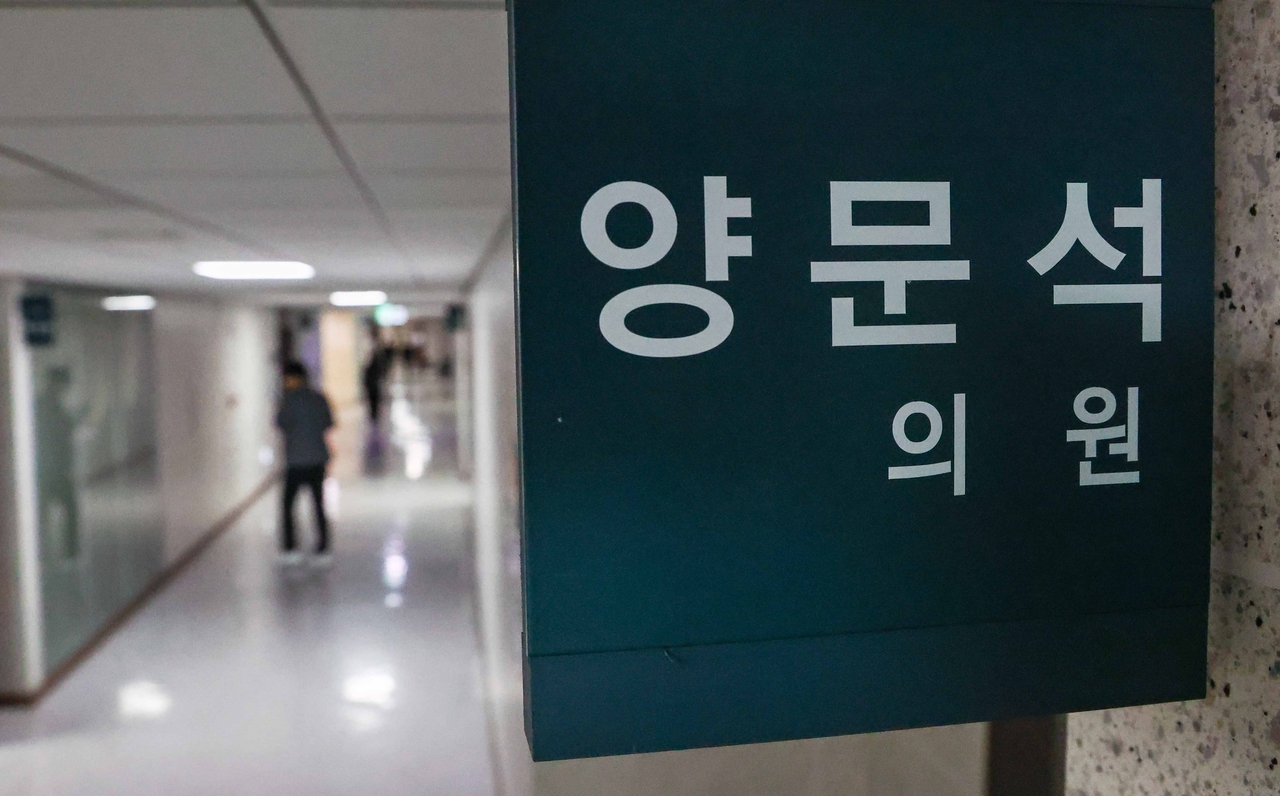
The Supreme Court on Thursday confirmed a suspended prison sentence for Rep. Yang Moon-seok of the ruling Democratic Party of Korea, effectively stripping him of his seat in the National Assembly.
South Korea’s highest court upheld an earlier ruling sentencing Yang to 18 months in prison, suspended for three years, saying the lower courts made no error in applying the relevant laws. Yang was found guilty of fraud after he and his wife fabricated documents to obtain an unlawful loan in their daughter’s name.
The Supreme Court also upheld the lower court’s ruling sentencing Yang’s wife, surnamed Seo, who was indicted alongside him, to two years in prison, suspended for three years.
In 2021, the couple made it appear that their daughter, who was in college at the time, was running a business and obtained a business loan worth 1.1 billion won ($744,000), using the money to purchase an apartment in Seocho-gu in southern Seoul. The scheme was intended to bypass mortgage restrictions on homes worth more than 1.5 billion won that had been introduced under the administration of former President Moon Jae-in.
Their actions violated the Act on the Aggravated Punishment, Etc. of Specific Economic Crimes.
However, the Supreme Court reversed and remanded the appellate court’s ruling on Yang’s charge of violating the Public Official Election Act by understating his family’s assets during the nomination process ahead of the parliamentary election. The top court said the lower courts had misinterpreted the relevant legal provisions when they concluded he sought to win the election by lying about his wealth, ordering the case to be reconsidered.
Regardless of the election law case, the fraud ruling alone is sufficient to strip Yang of his parliamentary seat.
Article 19 of the Public Official Election Act states that individuals sentenced to imprisonment without labor or heavier punishment, including a suspended prison term, are ineligible to run for office. Article 136 of the National Assembly Act states that a lawmaker loses their seat if they become ineligible.
After the ruling, Yang indicated he may challenge the decision through the new constitutional complaint system, which allows individuals to challenge court rulings through the Constitutional Court.
"If I decide there is a part of the Supreme Court ruling that overlooked the basic rights of my family, I will confer with my lawyers and request a decision by the Constitutional Court," Yang wrote in a Facebook post.
If he proceeds with the constitutional challenge, it would mark the first time a lawmaker has used the new system, which was implemented on Thursday.
minsikyoon@heraldcorp.com