'HBM 아버지' 심대용 동아대 전자공학과 교수
"중국, EUV 없인 1b 이후 막다른 길"
"진짜 격차는 빅테크 협업 경험, 문제 해결 역량"
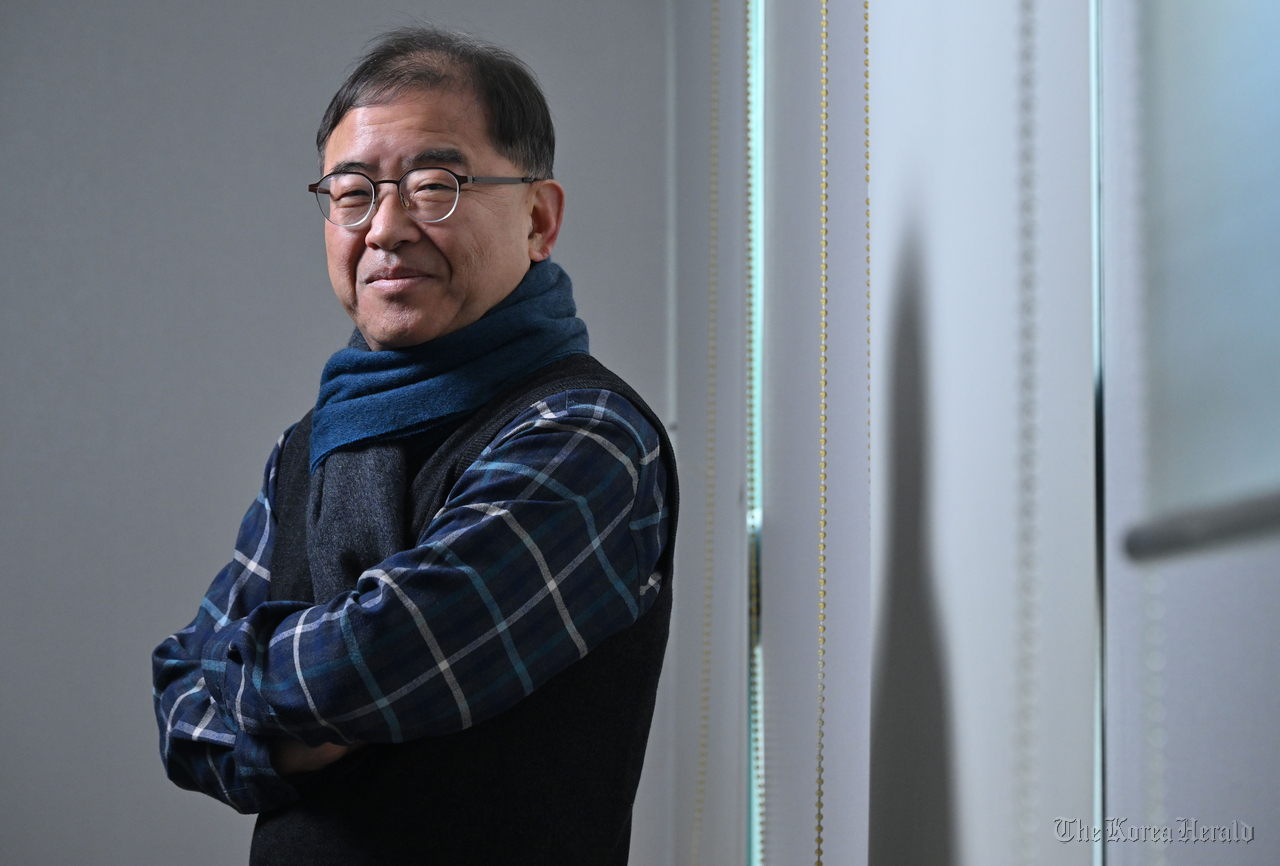
[코리아헤럴드=조혜림 기자] “중국과 한국 메모리 업체 간 격차는 D램에서 5년 이상, 낸드는 2~3년 차이가 난다고 봅니다. 특히 D램은 격차가 더 벌어질 가능성이 큽니다.”
중국의 메모리 반도체 굴기가 한국 반도체 산업을 위협하고 있다는 경고가 잇따르는 가운데, 심대용 동아대 전기공학과 교수는 최근 코리아헤럴드와의 인터뷰에서 "중국과의 기술 격차는 줄어들기 보다 오히려 벌어질 수 있다"고 말했다.
심 교수는 SK하이닉스에서 26년간 D램 핵심 기술과 고대역폭메모리(HBM) 초기 개발을 이끌었고, 2021년 부사장으로 회사를 떠나 학계로 자리를 옮겼다.
그는 “중국의 진전은 외부에서 보면 위협적인 뉴스로 보이지만, 업계 내부에서는 훨씬 더 냉정하게 평가하고 있다”고 했다.
“EUV 없는 1b 이후는 사실상 막다른 길”
심 교수가 지목한 중국의 구조적인 한계는 극자외선(EUV) 노광 장비 부재다. DRAM 공정은 통상 1x·1y·1z(20나노미터 이하)에서 1a·1b·1c(10나노미터급)로 진화한다.
심 교수는 “EUV없이 멀티 패터닝으로 1a까지는 버틸 수 있다. 실제로 마이크론도 그런 방식으로 양산에 성공했다"다"면서도 "하지만 1b부터는 EUV 없이는 사실상 불가능하다”고 말했다.
미국 주도의 수출 통제로 중국은 2019년 이후 네덜란드 ASML의 EUV 장비에 접근하지 못하고 있다. 이런 제약 속에서 중국 창신메모리(CXMT)가 지난해 11월 DDR5 양산에 돌입했다고 발표했지만, 해당 제품 역시 1a 공정 기반으로 추정된다. 칩 크기도 삼성전자와 SK하이닉스가 2021년 전후 출시했던 초기 DDR5 제품과 유사한 수준으로 알려졌다.
수율도 문제다. 업계에서는 CXMT의 DDR5 수율을 약 50% 수준으로 추정하는데, 상업적으로 의미 있는 가격 경쟁력을 확보하려면 최소 80~90%는 돼야 한다.
심 교수는 중국이 미세화 경쟁에서 한계를 느낄 경우 3D 적층 기술을 통해 우회로를 모색할 수는 있다고 봤다.
그는 “중국이 3D 스태킹(stacking) 기술로 기술격차를 메우는 전략을 택할 수 있다”며 “EUV 노광장비 없이 삼성전자, SK하이닉스, 마이크론을 따라올 수 있는 사실상 유일한 선택지”라고 말했다.
다만 그는 “문제는 3D 적층 기술이 결코 단순한 공정 문제가 아니라는 점”이라고 선을 그었다. HBM과 같은 고난도 적층 기술에는 TSV(실리콘관통전극) 공정을 비롯해 다층 적층을 안정적으로 구현하기 위한 다양한 소재와 장비가 필수적인데, 이 밸류체인의 핵심 소재가 일본에 집중돼 있다는 것이다.
대표적인 것이 언더필과 에폭시 몰딩 컴파운드(EMC)다. 언더필은 적층된 칩 사이를 채워 기계적 안정성과 열 특성을 확보하는 소재이고, EMC는 이를 외부에서 감싸는 일종의 보호 재료다. 이들 소재는 공정 조건에 맞게 정밀하게 최적화되지 않으면 수율과 신뢰성이 급격히 떨어진다.
심 교수는 “중국이 핵심 재료를 공정에 맞게 최적화 해야하는데 원재료 수급이 쉽지 않다”며 “이를 국산화 해야 수율을 잡을 수 있다”고 말했다.
실제로 삼성전자와 SK하이닉스도 수년 전부터 해당 소재의 국산화를 추진해 왔지만, 여전히 쉽지 않은 과제로 남아있다.
진짜 격차는 ‘경험과 신뢰’
“기술이 논문 등으로 다 나와있어서 흉내를 내기는 쉬울 수 있습니다. 하지만 반도체 사업은 결국 품질과 결함을 고치는 역량이 핵심입니다. 중국 정부로부터 보조금 받아서 수익 원가 보존하는걸로는 자생력을 갖기 힘듭니다."
심 교수는 중국과 한국 메모리 반도체 산업 간 격차의 핵심으로 제조기술 역량뿐 아니라 고객과의 협업 경험과 문제 해결 역량을 꼽았다.
그는 “결함은 언제나 발생한다. 문제는 얼마나 빨리 원인을 찾아 고객 일정에 차질 없이 해결하느냐”고 말했다.
글로벌 빅테크 기업들은 메모리를 단순히 구매하지 않는다. 자사 제품에 맞게 반도체를 함께 설계하고, 디버깅하고, 새로운 아키텍처에서 함께 검증한다.
심 교수는 약 8년 전 SK하이닉스가 애플 맥북용 LPDDR 저전력 반도체를 공급하던 사례를 들었다. 당시 모바일용 LPDDR을 데스크톱에 처음 적용하는 과정에서 출시 직전 치명적 결함이 발견돼, 자칫하면 2조 원이 넘는 손해배상과 대규모 리콜로 이어질 수 있는 상황이었다.
그는 당시 공정·소자·시스템·설계 전반을 점검해 일주일 만에 문제를 해결했다.
그는 "CPU와 모바일 그래픽 등 다양한 응용 분야에서 고객과 함께 기술 불량을 해결해온 경험이 없다면 글로벌 메모리 업체로 도약하기는 매우 어렵다"며 "마이크로소프트, 구글, 애플, 엔비디아와 같은 IT선도 기업들과의 협업 경험은 그 자체로 중요한 경쟁력"이라고 말했다.
심 교수는 당분간 글로벌 IT 기업들이 중국 메모리를 채택할 가능성은 높지 않다고 내다봤다.
그는 “이미 삼성과 SK하이닉스라는 검증된 공급자가 있는 상황에서, 품질·신뢰 이력이 없는 업체를 굳이 선택할 이유가 없다”며 “글로벌 빅테크 기업들이 CXMT 메모리를 채택하기는 쉽지 않을 것"이라고 말했다.
<기사 원문>
[China Factor] ‘The gap is more than five years’: Why China still trails in memory
As China’s rapid advance in memory chips fuels concerns over a potential challenge to market leaders such as Samsung Electronics and SK hynix, a veteran DRAM expert says the technology gap remains far wider than commonly perceived — and may be growing rather than narrowing.
“The gap is not two or three years. In my view, it is more than five,” said Shim Dae-yong, an electrical engineering professor at Dong-A University, in an interview with The Korea Herald. “In DRAM, especially advanced memory, China is more likely to fall further behind than catch up.”
Shim spent 26 years at SK hynix, where he oversaw core DRAM technologies and played a central role in the early development of high-bandwidth memory, the specialized DRAM now indispensable for artificial intelligence computing. He left the company in 2021 as a vice president.
“From the outside, China’s progress makes for striking headlines,” Shim said. “Inside the industry, the assessment is far more grounded.”
Structural limits: No EUV, no shortcut
According to Shim, China faces a fundamental constraint in advanced DRAM manufacturing: lack of access to extreme ultraviolet (EUV) lithography, which has become indispensable beyond early 10-nanometer-class nodes.
DRAM process generations typically progress from 1x, 1y and 1z — broadly sub-20-nanometer nodes — to more advanced 1a, 1b and 1c nodes in the 10-nanometer class.
“Multipatterning can stretch legacy tools to a point — Micron managed it at 1a,” Shim said. “But from 1b onward, EUV is effectively unavoidable. Without EUV, Chinese players are structurally limited.”
China has been cut off from EUV tools since 2019 under US-led export controls that prevent ASML, the world’s sole EUV supplier, from selling the equipment to Chinese firms.
Against that backdrop, Shim said ChangXin Memory Technologies’ announcement in November that it had begun mass production of DDR5 memory also highlights the limits of China’s progress.
The DDR5 chips are believed to be manufactured using a fourth-generation DRAM process (1a) and are reportedly larger than those produced by Samsung and SK hynix — comparable to Korean firms’ early DDR5 products shipped around 2021.
More importantly, CXMT’s reported yield of around 50 percent falls well short of the 80–90 percent typically required for commercial viability, pushing up costs and easing concerns that Chinese manufacturers could flood the market with low-priced DDR5 chips.
HBM, harder than it looks
China’s most realistic workaround, Shim said, lies not in further node shrinkage but in advanced 3D stacking — the foundation of HBM technology.
“As planar scaling slows, stacking density becomes just as important,” he said. “In theory, China could narrow part of the gap by pushing vertical integration without EUV.”
In practice, however, the bottleneck simply moves elsewhere — to materials and packaging.
Key inputs for HBM, including underfill and epoxy molding compounds, are dominated by Japanese suppliers such as Resonac and Namics. Optimizing these materials for each process node is critical for yield, thermal stability and long-term reliability — and remains a challenge even for Korean chipmakers after years of localization efforts.
“Without stable access to optimized underfill and EMC, 3D stacking becomes a yield nightmare,” Shim said. “That is not something you fix with capital expenditure alone.”
The real gap: experience and trust
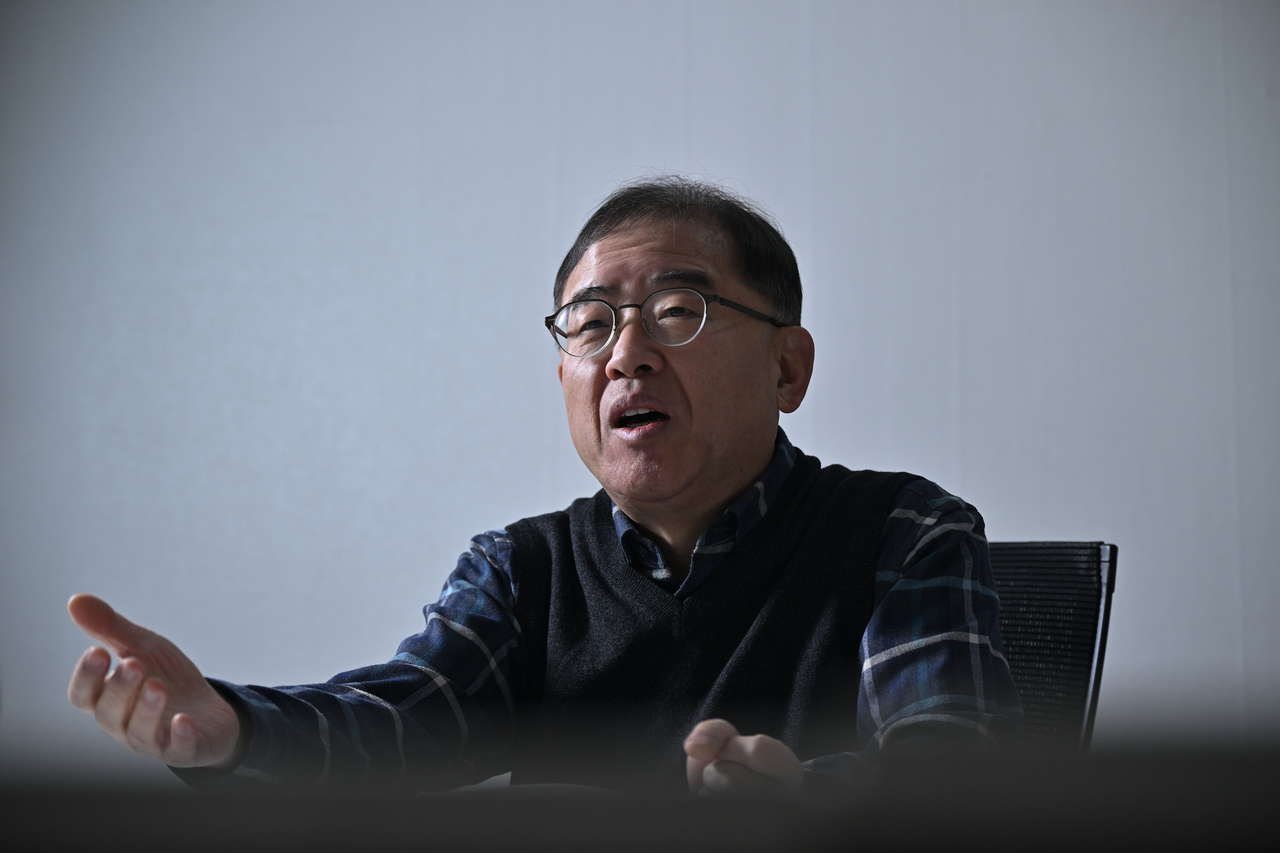
Shim Dae-yong, an electrical engineering professor at Dong-A University and former vice president at SK hynix, speaks during an interview with The Korea Herald in Seoul on Jan. 23. (Im Se-jun/The Korea Herald)
Shim Dae-yong, an electrical engineering professor at Dong-A University and former vice president at SK hynix, speaks during an interview with The Korea Herald in Seoul on Jan. 23. (Im Se-jun/The Korea Herald)
More fundamentally, Shim argued, Chinese manufacturers lack the collaborative experience that global memory leaders have accumulated over decades with major technology firms such as Microsoft, Google, Apple and Nvidia.
“Global tech giants do not simply ‘use’ memory,” he said. “They co-develop it. They debug it. They validate it across entirely new architectures. Those experiences cannot be replicated overnight.”
Defects are inevitable when memory chips are deployed in cutting-edge products, Shim said. What matters is whether a supplier can identify the root cause and resolve it fast without disrupting customers’ product roadmaps.
He recalled an incident about eight years ago, when SK hynix supplied low-power DRAM for Apple’s Mac computers — one of the first attempts to adapt mobile memory for desktop systems.
Just before launch, a critical defect emerged that could have exposed SK hynix to compensation claims exceeding 2 trillion won and forced Apple to recall a year’s worth of shipments.
As the executive overseeing the project, Shim coordinated across device physics, process engineering and system-level design to identify the flaw and resolve it within a week.
“Being able to make the chip is only one part of the business,” he said. “The real challenge is raising yields, proving reliability and earning customers’ trust as a stable, long-term supplier.”
“For now,” Shim added, “it is highly unlikely that major technology firms will adopt CXMT’s chips, given the availability of proven suppliers such as Samsung and SK hynix — and China’s lack of a track record in quality assurance and defect resolution.”
herim@heraldcorp.com