President’s mention of sanitary pad price leads to follow-up actions in industry, with concerns over health issues
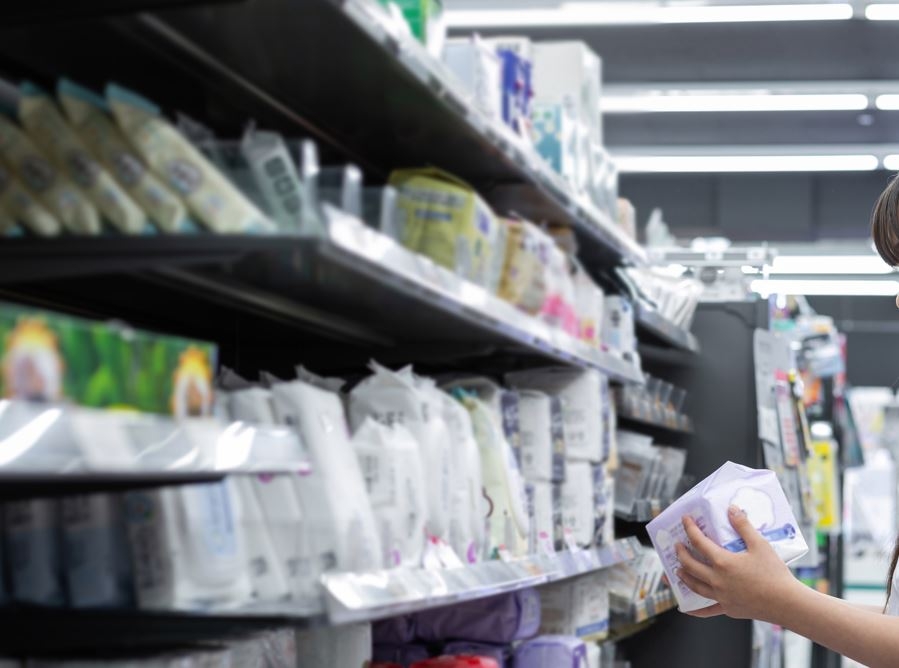
The South Korean government is leading a push to cut the cost of sanitary pads, after reports of a rise in women using diapers instead to save money.
"The absorption rate (of a diaper) is just as good as the pad, and it's more comfortable, but it is at least three times — up to eight times — cheaper than the pad. Overall, I'd say it's a suitable substitute," said one YouTuber in her review video posted recently, which had over 39,000 likes and over 1,200 comments, most of whom were from users frustrated by the high cost of sanitary products.
In a Cabinet meeting on Jan. 20, President Lee Jae Myung ordered a review of policies to bring pad prices down, such as commissioning the manufacture of standardized low-cost pads and free distribution to certain groups. He also ordered a Fair Trade Commission investigation into the alleged overpricing of sanitary pads.
Women typically menstruate for well over three decades from their teen years to menopause around their early 50s, making the accumulated cost of sanitary pads substantial. As such, alleged overpricing has prompted immediate reaction from both the industry and the public.
Are sanitary pads really that expensive in Korea?
Local distributors responded to Lee's comments by promising to expand lineups of cheaper products as early as the first quarter of this year.
Yuhan-Kimberly, a local business specializing in household goods, said Tuesday it would expand its supply of mid- to low-tier products — which can be half the price of the company's premium products. LG Unicharm and KleanNara, other prominent suppliers of sanitary pads, also vowed to increase the supply of their cheaper products.
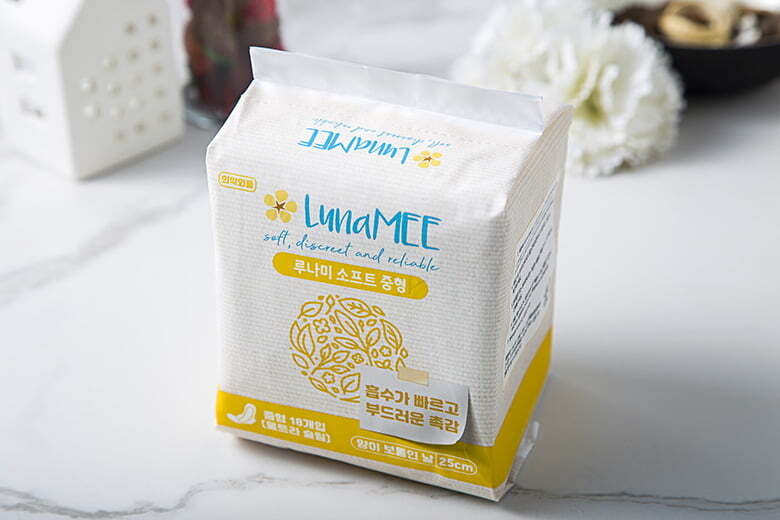
Coupang, the largest player in the country's e-commerce market, announced Thursday a further discount on its LunaMEE sanitary pads. It will sell four-packs of 18 mid-sized pads for 7,120 won, down from 9,390 won, working out at about 99 won ($0.07) per pad.
Research by the NGO Korean Women’s Environmental Network in 2023 indicated that menstrual products sold in Korea were more expensive than those in 11 other surveyed regions — the US, the UK, Japan, Singapore, France, Germany, Italy, Spain, the Netherlands, Canada and Australia. The report said that sanitary pads in Korea were, on average, 39 percent more expensive, although large pads were 1.64 percent cheaper here.
While this is not official government data, other figures from the Ministry of Data and Statistics indicate that prices of sanitary pads have risen faster than inflation in recent years.
The consumer price index for sanitary pads increased by 20.91 percent from 2020 to 2024, while the overall price index rose by 14.18 percent during the same period.
There have been allegations that the limited number of pad distributors has allowed them to drive up prices in Korea.
The aforementioned three companies reportedly have a combined market share of at least 70 percent. Yuhan-Kimberly alone had a market share of 47 percent in 2016 and still maintains its status as an overwhelming leader in the industry.
In addition to the FTC's ongoing investigation into sanitary pad companies, the National Tax Service said Tuesday it had launched an audit against 17 businesses suspected of tax evasion. This included sanitary pad distributors suspected of exaggerating costs under the pretense of manufacturing premium products.
Concerns remains, particularly over hygiene
While women's groups welcomed Lee's push for low-priced sanitary pads, they also raised concerns that it could lead to a deterioration in quality.
KWEN expressed support for the Lee administration's move but pointed out that rising pad prices were connected to health concerns with non-premium brands. It stressed that addressing pad hygiene should precede lowering the price.
"Women try out many products to minimize side-effects from using the pads, which results in them paying more to buy the so-called premium sanitary pads. ... The government should focus not only on manufacturing low-priced sanitary pads, but also establish a system of producing, managing and distributing cheaper and safer pads under the supervision of the state," the group said in its recent statement.
Some proponents of a free-market economy raised concerns about government interference in the market economy.
A local think tank, the Center for Free Enterprise, criticized Lee's approach as "populist" and said that setting a proper price and quality of a specific product is fundamentally against the principles of the market economy.
"If it (the sanitary pad) is too expensive, the first question should be 'why.' The fundamental factors of distorted pricing, such as the cost of raw materials, distribution networks, regulations on imports, certification and excessive administrative regulation, should be inspected first, and proposing distribution without such a process is a backward policy," the group said. It suggested subsidizing low-income individuals as a realistic alternative that would not have a major impact on the market.
The Ministry of Gender Equality and Family subsidizing sanitary pads at 168,000 won per person for females aged 9-24 from low-income families. The ministry said it was reviewing various alternatives to the current policy, including expanding the subsidy to all women in that age group or distributing government-commissioned pads as Lee suggested.
A ministry report showed that of some 234,000 women eligible for the program, 88 percent had applied.
KWEN said it has encountered repeated cases of teenagers unable to procure enough sanitary pads, and urged the government to allocate a budget for universal distribution of menstrual products for teens.
"Menstruation is not a matter of choice for individuals, and cheap and safe menstrual products are a basic human right that should be available to everyone," it said.

minsikyoon@heraldcorp.com