Second-generation leader Cho Hee-kyung bets on patience, global growth and premium strategy
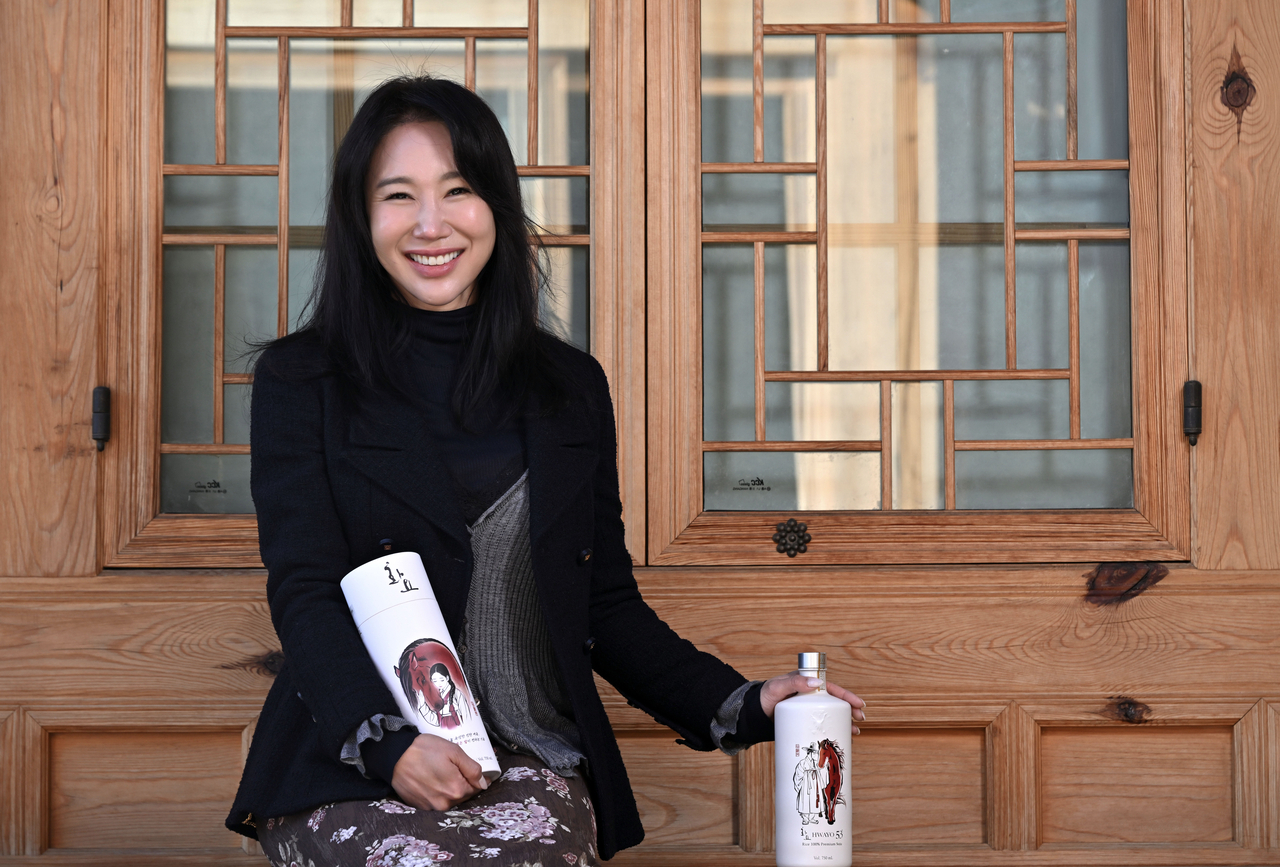
Korea’s leading premium distilled soju maker Hwayo took more than 10 years to turn a profit for the first time in 2015. Another decade later, Cho Hee-kyung -- Hwayo’s young leader and the second-oldest daughter of Hwayo founder and chair Cho Tae-kwon -- is poised to play the waiting game with resilience to take the next leap forward.
“Our strategies are continuously changing as of late, and one of the reasons is that there are uncertainties,” said Cho Hee-kyung in an interview with The Korea Herald at Sukyungjae, Hwayo Group’s traditional Hanok-themed store in the Bukchon Hanok Village in Seoul on Jan. 8.
“So in this situation, I think we need to practice flexibility. While our global business expansion has been quite bold, innovative and speedy, I think this year may consist of a lot of waiting. But it’s not waiting and missing opportunities -- it's waiting and preparing.”
Last month, Hwayo announced a reorganization of its group structure -- which used to be called Kwangjuyo Group, helmed by the traditional Korean ceramics branch Kwangjuyo -- into Hwayo Group. Led by the premium distilled soju brand, Hwayo Group features Kwangjuyo and Gaon Society, the operator of high-end Korean dining establishments.
“As we are a company that creates culturally meaningful products, it takes time for our products to take root,” said the Hwayo president.
“If Hwayo 19 Golden was a product that enabled us to communicate last year with a focus on the brand, we plan to launch two to three products this year that show we are thinking about going global and the process (of doing that).”
The premium distilled soju brand launched Hwayo 19 Golden in June last year, rolling out its first new product in 10 years. The latest addition expanded its liquor portfolio to six selections along with Hwayo 17, Hwayo 25, Hwayo 41, Hwayo 53 and Hwayo X.Premium. The numbers at the end of each product indicate alcohol by volume. Hwayo X.Premium uses Hwayo 41 concentrate aged in oak barrels.
According to Cho, Hwayo’s new products for 2026 may include an export-only drink or a highly exclusive, ultrapremium drink.
“2026 will show Hwayo’s potential,” she said. “We're going to show how many facilities we have and what kind of original concentrates we have that others don’t. … (It could be) a product others might say, ‘Wow, (Hwayo) put so much effort into that for so long?’ or a product that shows new potential for what we can do with rice, since we emphasize ingredients a lot.”
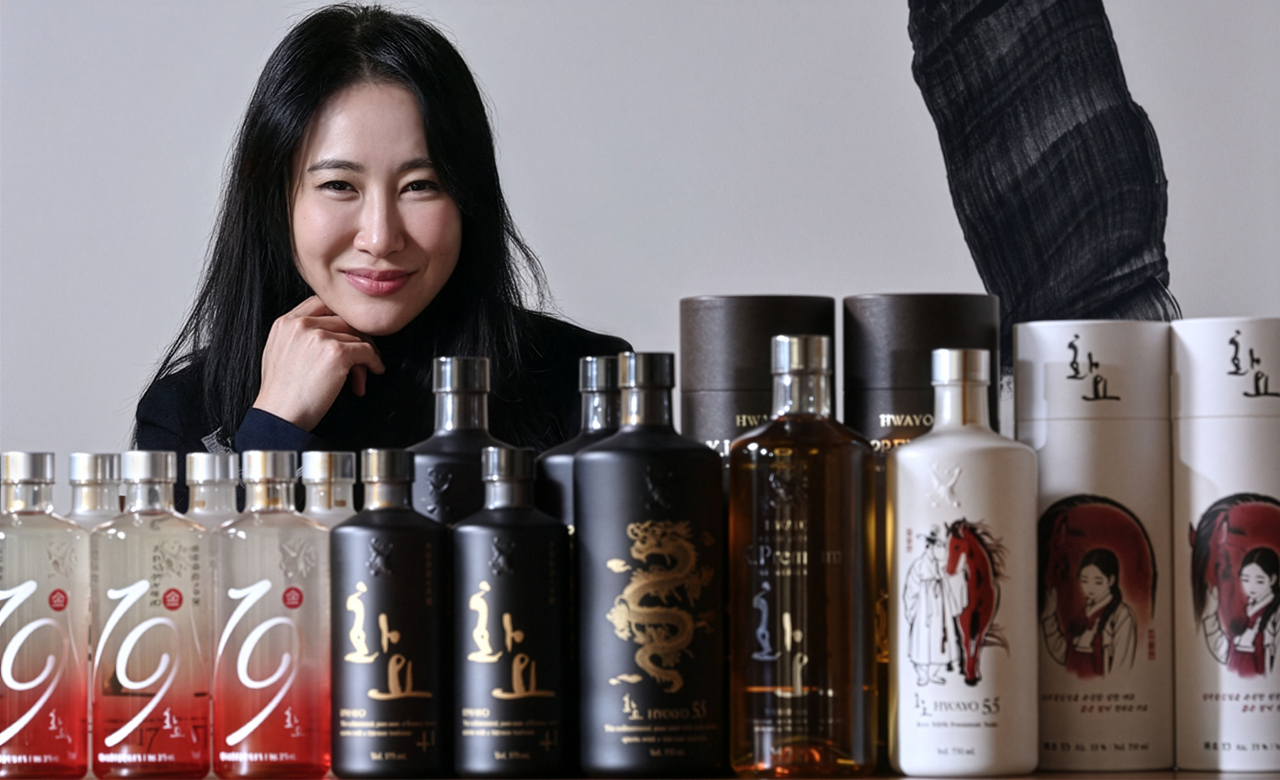
Mentioning Chinese baijiu, Japanese sake, wine, tequila and vodka, Cho noted that it is important for Hwayo to try to catch up to their level and narrow the gap, which was inevitable due to the other liquors having been developed and marketed long before Hwayo existed.
“It’s just the beginning for Hwayo,” she said. “After turning a profit and entering a stable phase, our global strategy now is to create good reviews, good opportunities, good people, good times and good memories.”
Hwayo’s annual revenue surpassed the 10 billion won ($7 million) mark for the first time in 2015. The figure has continued growing since then as its total shipping amounts hit 36 billion won in 2021 and 71.2 billion won in 2024. The Korean premium distilled soju leader currently exports its products to 29 countries, with the United States being the largest market.
Regarding Korea’s ad valorem tax policy on soju curbing the growth of Hwayo and other distilled soju brands, Cho underlined the need to revise the law to bolster the Korean spirit industry.
“Under the current alcohol tax policy, Korea’s domestic products are not competing on a level playing field with imported liquor products,” she said. “(Imported) products of low quality are sold at prices similar to those of our products. … What Hwayo is calling for nowadays is to allow per-unit taxes for liquor products that are made from domestic ingredients. … Korea's soft culture is not just K-pop -- we need policies that can revolutionize Korea’s deep-rooted character and ingredients.”
Japanese sake used to be under ad valorem tax policy until 1989. The Japanese government changed the regulations on sake to a per-unit tax to bolster the country’s traditional liquor industry. Since the switch, the sake industry grew rapidly with a greater variety of styles and high-quality products, becoming Japan’s national liquor with an annual global market of about 13 trillion won today. On the contrary, the value of Korea’s distilled soju output stood at about 133 billion won in 2024.
The Hwayo president, who recently unveiled the goal of reaching 100 billion won in total shipping amount for this year at the group’s reorganization announcement in Dec., laid out even bigger goals for the next decade.
“I firmly believe that we'll be thriving 10 years from now, with more success and global markets,” said Cho.
“Over the next 10 years, we must increase our sales at least fivefold. … Because Hwayo has such strong intellectual property, I think it has a great chance of expanding into various formats. … I can say that it’s our tradition to keep moving forward unwaveringly, regardless of external factors.”
Cho, born in 1981, received her bachelor of fine arts from the School of the Art Institute of Chicago, her MBA from the Loyola University Chicago and a Master's in Quality Food and Cultural Communication from Italy's University of Gastronomic Sciences in Pollenzo.
She began working as a brand director at the Hwayo Group -- then Kwangjuyo Group -- in 2010 and took on the leadership of Gaon Society in 2012. She played a key role in earning three Michelin stars with Gaon in 2016 and maintaining that prestigious recognition through 2022. She was eventually appointed president of Hwayo at the end of 2023.

hwkan@heraldcorp.com