Seoul and Tokyo agree to begin joint identification of remains from colonial-era Chosei mine disaster
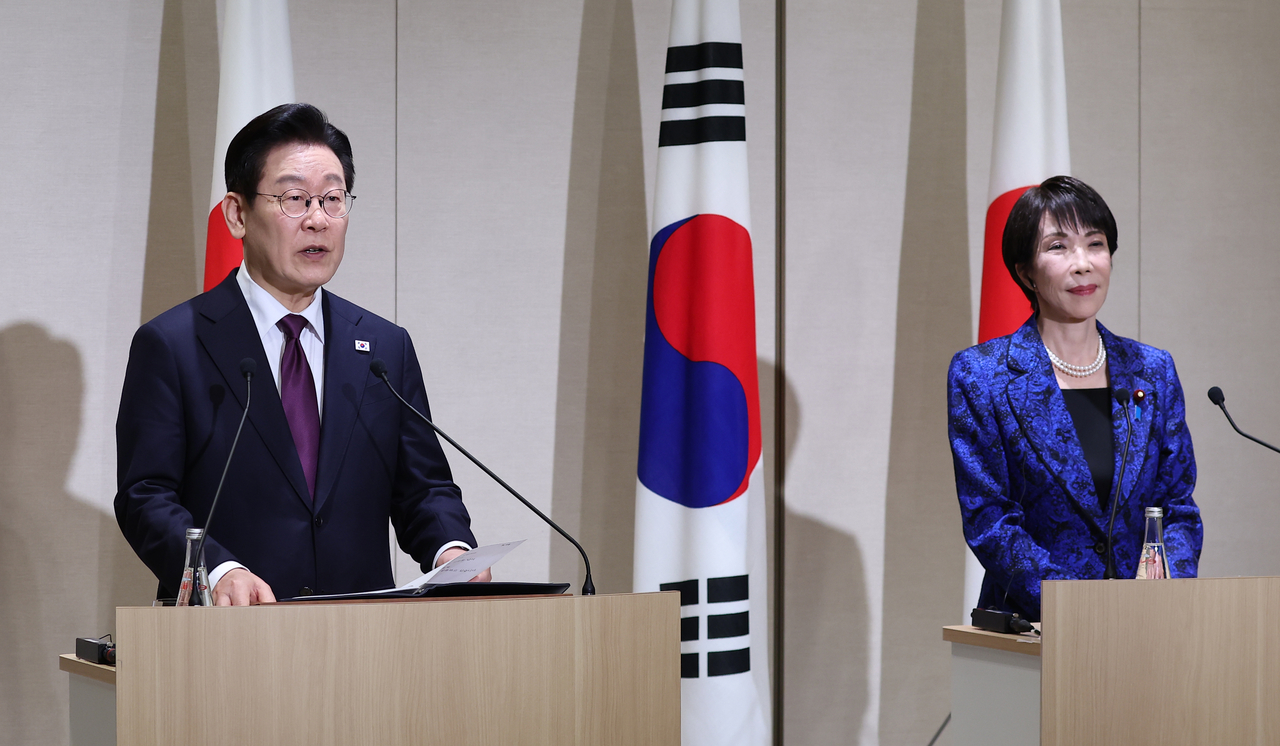
NARA — President Lee Jae Myung called on South Korea, China and Japan to choose dialogue and cooperation at his summit with Japan’s leader, as China-Japan tensions sharpen and regional security becomes more volatile.
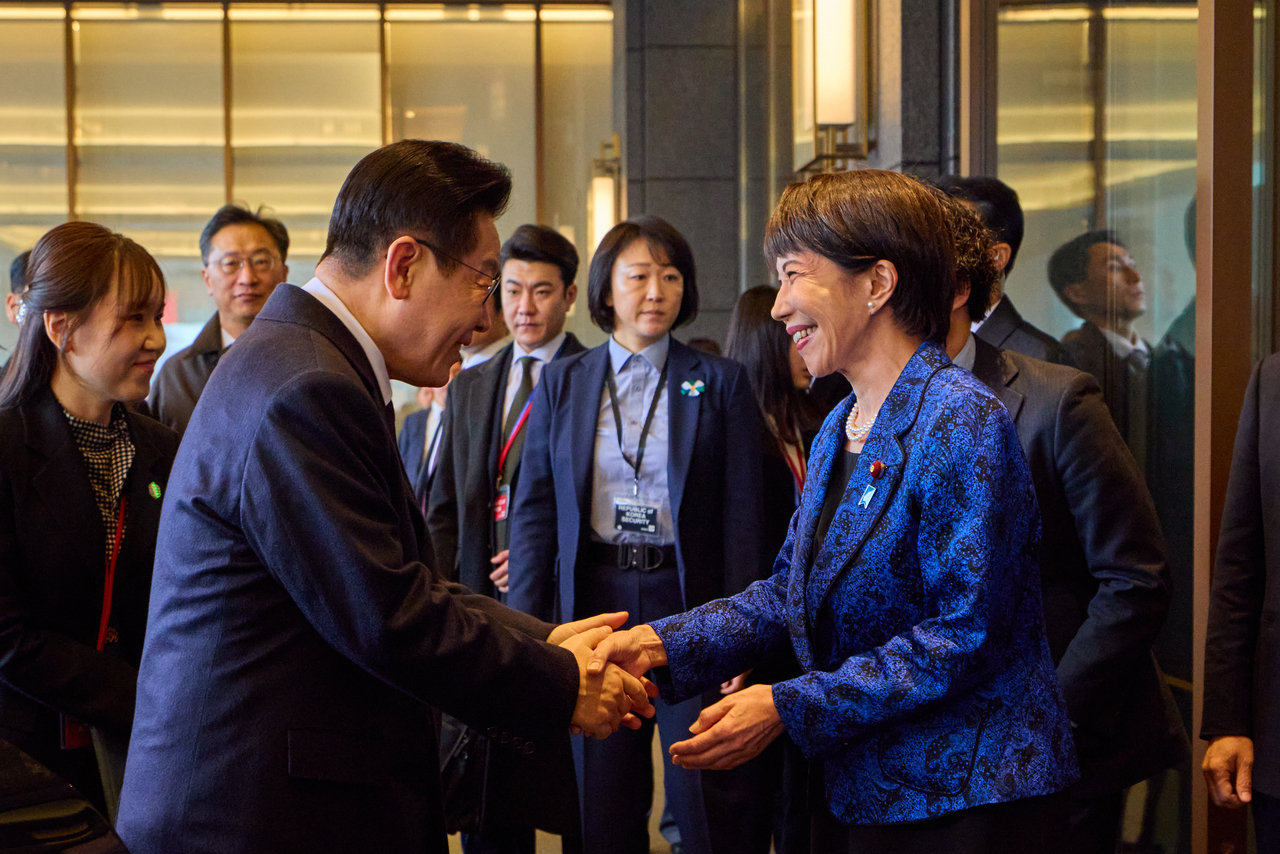
Lee delivered the message during his meeting with Japanese Prime Minister Sanae Takaichi on Tuesday in Nara Prefecture, where the two leaders exchanged wide-ranging views on regional and global challenges.
Lee said he and Takaichi “shared an understanding of the importance of Korea-Japan cooperation, as well as trilateral South Korea-US-Japan cooperation, to preserve peace and stability in the region amid a rapidly shifting international environment.”
“I also emphasized that the three Northeast Asian countries — South Korea, China and Japan — need to find as much common ground as possible and move forward through dialogue and cooperation,” Lee said during a joint news conference following the summit.
The Lee-Takaichi summit, held a week after Lee’s Jan. 5 meeting with Chinese President Xi Jinping, unfolded amid escalating China-Japan tensions over Taiwan, which are spilling beyond the military domain into areas such as supply chains.
Against that backdrop, attention has sharpened on how South Korea calibrates its message on regional stability, as Lee holds back-to-back summits — an unusually rapid sequence — with the leaders of both China and Japan.
Speaking at a joint news conference, Takaichi said she and Lee had held “in-depth discussions on the regional landscape during the summit.”
“As a result, we confirmed the close solidarity between the two countries under the current strategic environment,” she told reporters.
Takaichi said she and Lee shared a view of the “strategic importance” of Korea-Japan relations and affirmed that the two countries should “stand together and play a role in maintaining regional stability.”
“With the strategic environment surrounding our two countries growing increasingly severe, the importance of Japan-South Korea relations and solidarity among Japan-South Korea-US is becoming even greater,” Takaichi added.
“With regard to our response to North Korea, including the nuclear and missile issue, we reaffirmed that Japan and South Korea, together with the US, will respond through close coordination toward North Korea’s complete denuclearization,” Takaichi said.
Takaichi also thanked Lee for what she described as his “strong support” for resolving the abductions of Japanese nationals in North Korea “as quickly as possible.”
Lee said the two leaders “reaffirmed their commitment to the complete denuclearization of the Korean Peninsula and to building lasting peace, and agreed to continue close coordination on North Korea policy.”

Humantarian cooperation on historical issues
On the history front, Seoul and Tokyo have agreed to begin working-level talks on the joint identification of the remains of Koreans believed to be trapped in an undersea mine collapse during Japan’s colonial rule.
The Chosei coal mine disaster occurred on Feb. 3, 1942, when an undersea tunnel off Ube in Yamaguchi prefecture was flooded, killing 183 workers, including 136 forcibly mobilized Koreans. The Japanese government never recovered the victims’ remains or conducted a full investigation.
“The two sides have agreed to pursue DNA testing to identify the remains, and to hold working-level consultations between relevant authorities on the specifics,” Lee said at the joint news conference.
“Through this summit, I find it meaningful that we were able to achieve a small but significant step forward on historical issues,” Lee said. “I am grateful for the respected prime minister’s special attention.”
The outcome came after Cheong Wa Dae said Seoul’s goal is to make the summit an opportunity for South Korea and Japan to pursue humanitarian cooperation on historical issues, including those related to the Chosei coal mine.
Takaichi also welcomed the "progress being made in bilateral coordination to enable cooperation on DNA testing related to the remains discovered at the Chosei coal mine.”
Lee noted that human remains suspected to be from the accident were discovered only in August, more than 80 years later.
The discovery was driven by public pressure rather than government initiative. Since the early 1990s, Japanese activists and the families of Korean victims have worked together to investigate the case and push for the recovery of remains, while critics have faulted the Japanese government for hesitating to take the lead on excavation efforts.
For next 60 years
The summit covered a wide range of issues spanning the economy and economic security as well as technology, social cooperation, and broader exchanges in the humanities and everyday life.
Speaking at the news conference, Lee said he and Takaichi “held wide-ranging discussions on practical ways to sustain future-oriented cooperation between our two countries, building on the foundation of shuttle diplomacy that the two sides have established.”
Takaichi said Seoul and Tokyo “agreed to deepen discussions among relevant authorities to pursue strategic, mutually beneficial cooperation” on the economic and economic-security fronts. The prime minister added, “In particular, I held in-depth talks with the president on supply chain cooperation.”
On social issues, Lee said the two countries "agreed to step up joint action against transnational crime, including scam-related offenses,” an area where Korean authorities have pushed for tighter cross-border coordination.
Lee said Japan would join an international cooperation consultative body launched under the leadership of the Korean National Police Agency. The two sides would also adopt a written agreement to provide institutional backing for sustained collaboration, he added.
Lee and Takaich also endorsed practical, people-centered cooperation through the bilateral consultative body on shared social challenges, Lee explained, covering issues from low birthrates and aging to regional revitalization, agriculture, disaster prevention and suicide prevention, and pledged to deliver concrete results.
Lee further explained that mutual understanding among younger generations is central to future-oriented ties, with annual people-to-people exchanges now around 12 million,
Against that backdrop, the two sides discussed steps to expand youth programs, ease entry procedures, encourage school trips and extend mutual recognition of professional qualifications beyond the IT sector.
Lee said this year would serve as the first year of a new 60-year era in bilateral relations, after the two countries marked the 60th anniversary of normalization last year.
“As today’s Korea-Japan summit demonstrates, the new year will serve as a starting point for reflecting on the past 60 years of Korea-Japan relations and for preparing for the next 60 years."
dagyumji@heraldcorp.com