Chipmaker begins supplying SOCAMM2 samples as Nvidia prepares next-generation Rubin platform
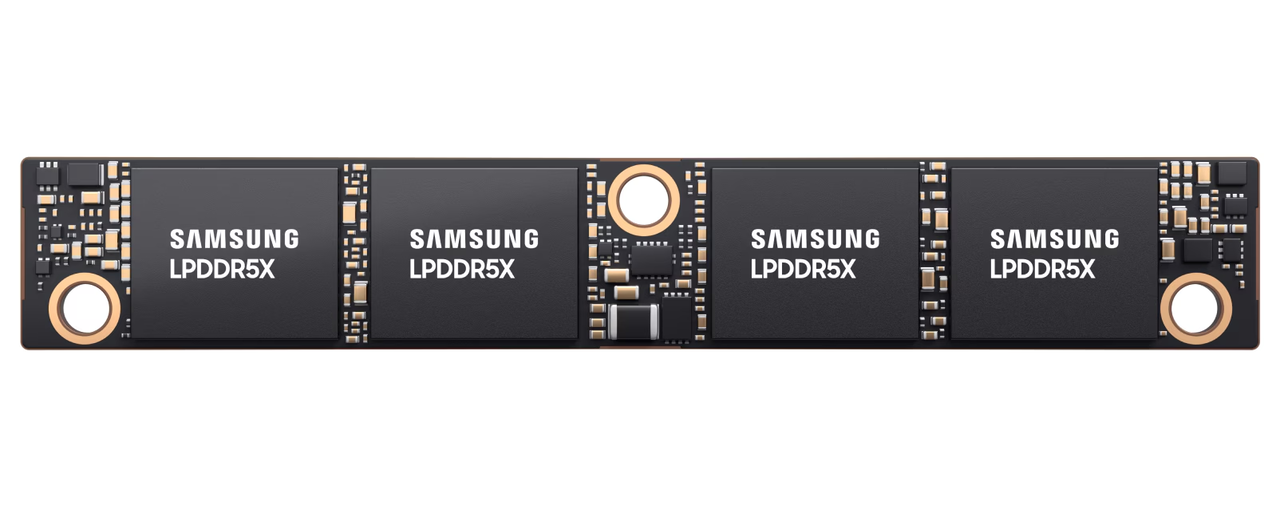
Samsung Electronics is emerging as an early front-runner in SOCAMM2, a next-generation memory technology for AI servers, by working closely with Nvidia from the design stage.
The Korean chipmaker said Thursday that it has begun supplying customer samples of SOCAMM2, marking a key milestone as the industry prepares for Nvidia’s next-generation Rubin AI accelerator platform.
SOCAMM2, short for Small Outline Compression Attached Memory Module, is designed to meet soaring demand from AI data centers for memory that is both fast and energy-efficient. While much of the AI boom has focused on high bandwidth memory — which sits next to graphics processing units to deliver ultra-fast data speeds — SOCAMM serves a different role.
SOCAMM is paired with central processing units and is optimized for overall system efficiency. It stacks multiple LPDDR5X chips, low-power memory commonly used in smartphones, into a compact server module. This allows AI servers to process large amounts of data while consuming significantly less electricity — a growing concern as data centers face rising power constraints.
Samsung said development of its SOCAMM2 DRAM chips is nearing completion, with the product now entering the customer sample stage. Memory development typically progresses from engineering samples to customer samples and finally to mass production. The customer sample phase is critical, as clients test stability, compatibility and manufacturability in real-world systems.
Securing early validation is particularly important because Nvidia plans to adopt SOCAMM2 in its upcoming Vera Rubin platform. Suppliers selected at this stage often gain a strong advantage once large-scale deployment begins.
Samsung faces competition from SK hynix and Micron Technology, both of which are also racing to commercialize SOCAMM products. Micron initially appeared to lead the development of first-generation SOCAMM, but technical delays slowed deployment, effectively resetting the race. Both SK hynix and Micron have said they have delivered or plan to deliver samples to Nvidia.
In its tech blog, Samsung emphasized that it "is working closely with Nvidia to optimize SOCAMM2 for accelerated AI infrastructure,” adding that the goal is to deliver the responsiveness and power efficiency required for next-generation AI inference systems.
Nvidia echoed that view. Dion Harris, senior director of high-performance computing and AI infrastructure solutions at Nvidia, said memory efficiency is becoming increasingly critical as AI workloads shift from model training to real-time inference and complex reasoning.
Samsung said SOCAMM2 delivers more than twice the bandwidth of conventional server memory while consuming over 55 percent less power, enabling data centers to handle heavier AI workloads without a corresponding surge in energy use.
Demand for LPDDR-based memory, which underpins SOCAMM2, is expected to grow rapidly. Shinhan Investment projects modest growth in 2025, followed by a sharp expansion in 2026 as AI servers increasingly adopt power-efficient memory solutions.
Industry analysts expect the SOCAMM2 market to scale quickly once Nvidia’s Rubin platform enters mass production in the second quarter of 2026, with early reference suppliers likely to capture a significant share of the market.
herim@heraldcorp.com