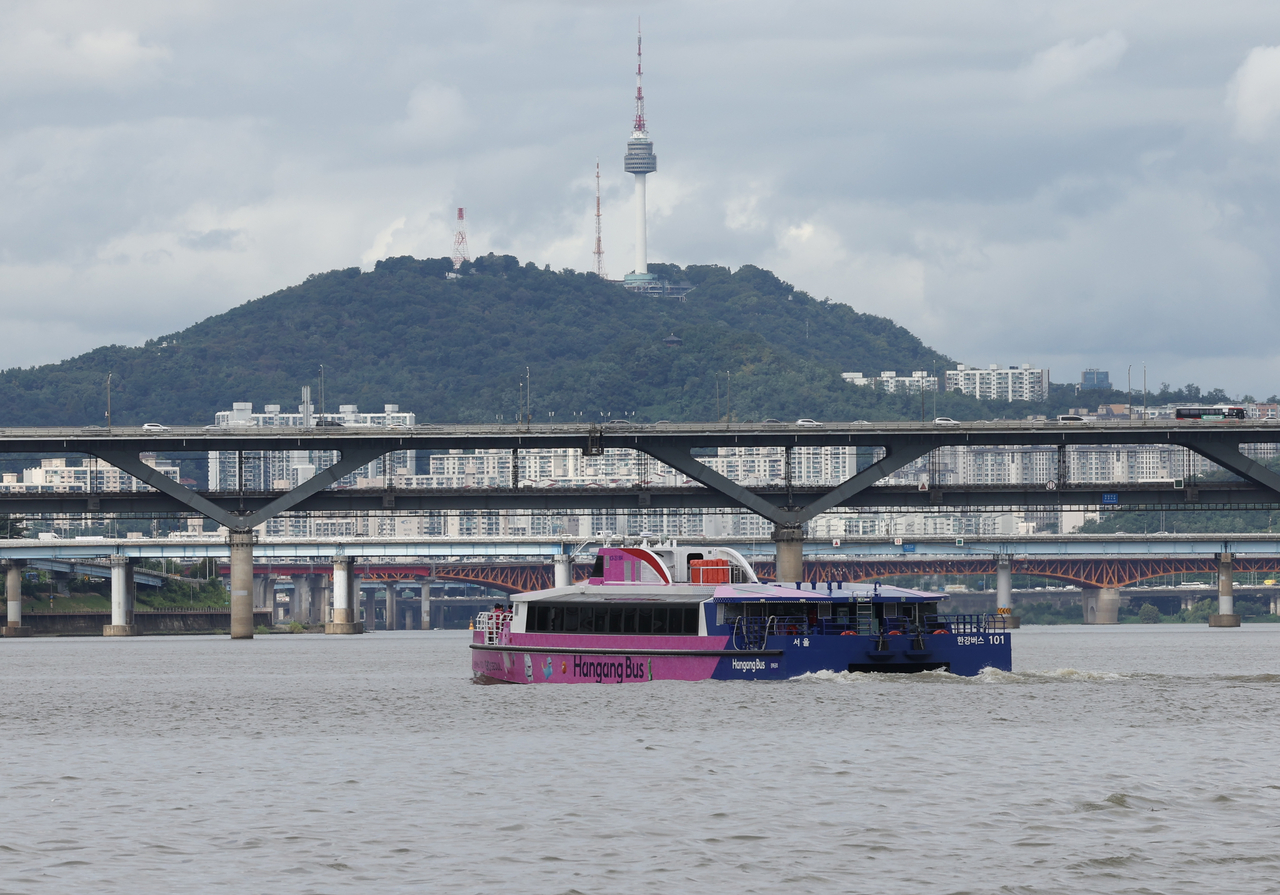
Seoul launched its new waterborne public transit service, Hangang Bus, on Thursday, drawing both praise and criticism over its environmental impact and effectiveness as a commuting option.
On the day of its launch, large crowds flocked to Magok Pier to secure a seat on the water bus. Tickets were sold out within minutes, with some unable to board despite waiting.
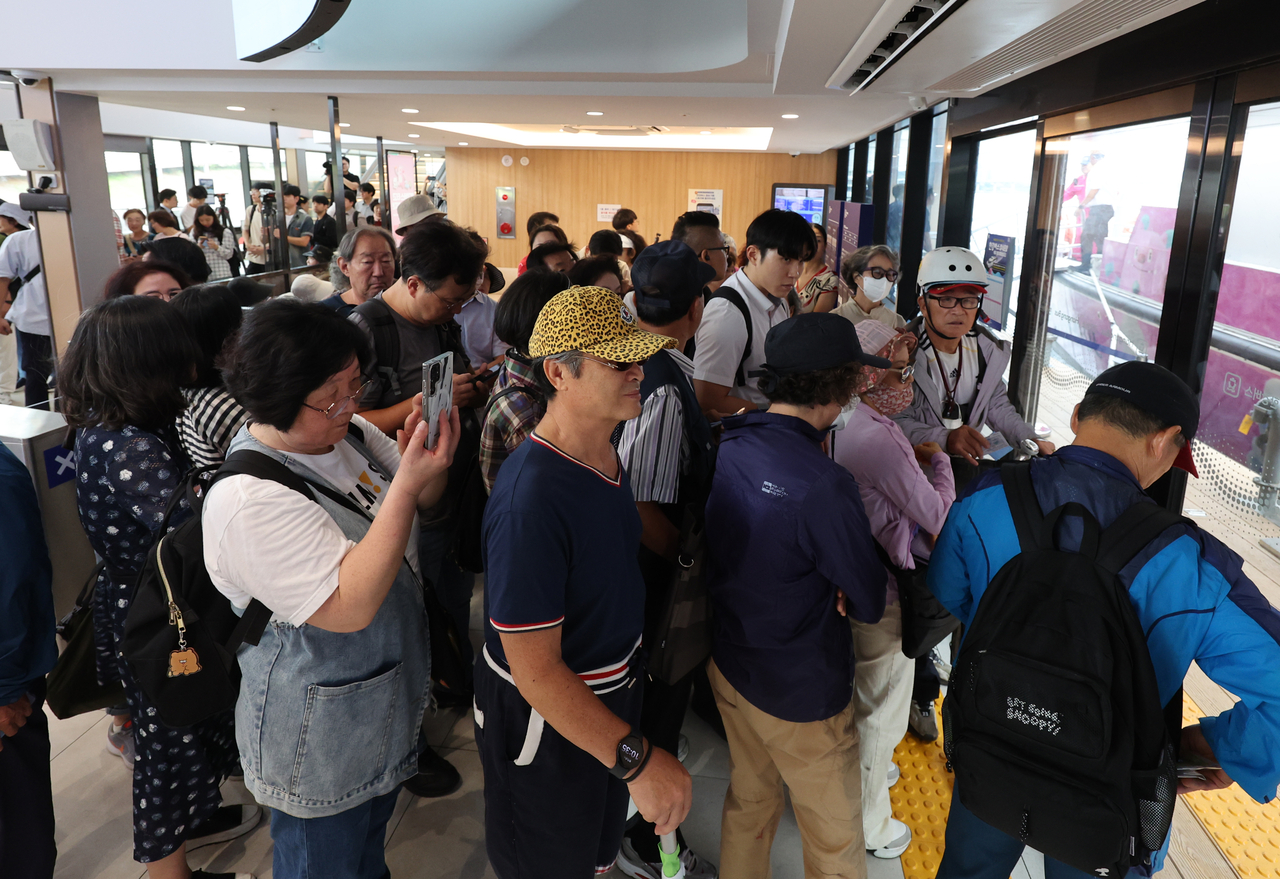
While many welcomed the novelty of the Hangang Bus, opinions were divided as to whether the bus could serve as a practical commuting option.
“If your office is in Yeouido, maybe it works,” 36-year-old Cho Seung-hyun told Yonhap News Agency. “But from Magok to Jamsil, the two-hour ride isn’t very realistic.” Others also noted the long intervals between one water bus and the next, saying that a 90-minute wait isn’t “commuting, but tourism.”
For travelers looking forward to using the Hangang Bus as an option for leisure, they added that the slow pace “was part of the charm.”
“I plan to use this service with my bike from Magok, exercise in Jamsil and ride back,” 68-year-old Lee Su-yong was quoted as saying by Yonhap News Agency. “There’s no rush, it’s enjoyable.”
The operations started from 11 a.m. to 10:30 p.m. between seven piers: Magok, Mangwon, Yeouido, Oksu, Apgujeong, Ttukseom and Jamsil. As the first water-based public transport service of its kind in Korea, the initial operation will have eight vessels making 14 trips per day. The one-way trip from Magok to Jamsil is estimated to take 127 minutes.
The water-bus service was initially set to begin in September 2023. When the announcement was made back then, the water bus was advertised as a new public transportation method that would alleviate long rush hour commutes.
The city government said the new Hangang water buses would be hybrid and electric, aiming to reduce carbon emissions in Seoul.
However, a local environmental group, the Seoul Korean Federation for Environmental Movements, questioned the city’s claim that the buses are fully eco-friendly, noting that diesel engines were still used when the hybrid vessels operate at high speeds.
The city responded that its hybrid diesel buses produce 52 percent less carbon dioxide than traditional diesel vessels, while some buses were fully electric, and had no direct emissions.
The service also faced safety concerns after its inauguration, scheduled for Wednesday, was abruptly canceled due to a heavy rain advisory. Critics pointed out that the buses would be increasingly vulnerable as climate change makes weather more unpredictable.
Seoul KFEM said the cancellation “shows the city government didn’t take such factors into consideration, despite repeated warnings,” pointing out that Seoul’s extreme rainfall and seasonal weather differ from milder climates in other cities with water bus systems, such as London.
"While the weather in Europe, for example, is mild and rainfall is (relatively) light year-round, Seoul experiences more heavy rainfall than ever, driven by climate change, as well as extreme summers and winters,” wrote Seoul KFEM in its press release.
“The cancellation of the inauguration ceremony shows that the city government didn’t take such factors into consideration, despite constant warnings filed toward the city regarding this matter.”
lee.jungjoo@heraldcorp.com