HD Hyundai, Doosan Enerbility, and HJ Heavy Industries gain traction as US seeks alternatives to Chinese port cranes
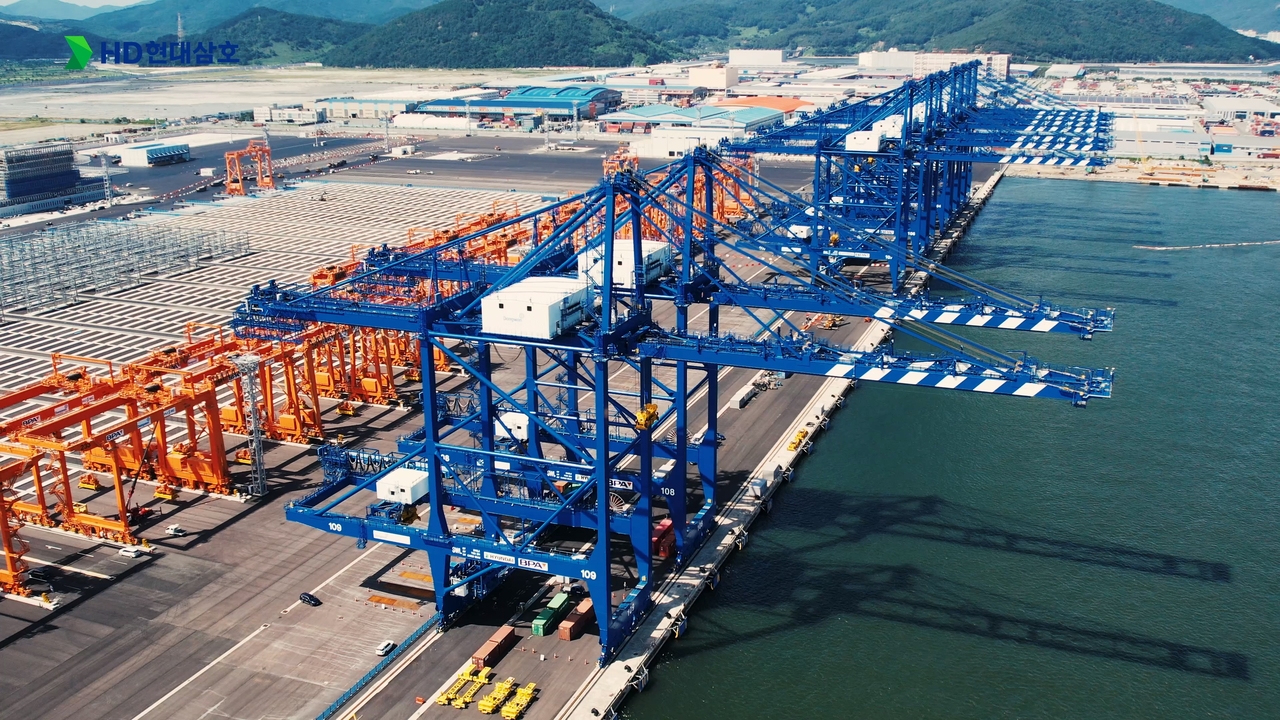
Port cranes have surfaced as Korea’s next bargaining chip in tariff negotiations with the United States in the wake of the Trump administration’s efforts to phase out made-in-China cranes at US ports.
The US Trade Representative announced a plan last month to impose tariffs of up to 100 percent on ship-to-shore, or STS, cranes and cargo handling equipment made in China or built using Chinese parts, emphasizing the need to reduce America’s reliance on Chinese maritime infrastructure and address national security concerns.
According to a report by the US Select Committee on the Chinese Communist Party, Shanghai Zhenhua Heavy Industry, or ZPMC, the world’s largest STS crane manufacturer, run by the Chinese government, accounts for almost 80 percent of the STS cranes used at US ports. The report added that there were no domestic manufacturing alternatives for STS cranes in the US.
The US has openly mentioned Korea’s shipbuilding sector as an area where it seeks cooperation while it continues to push for the revitalization of its own shipbuilding industry. On top of the shipbuilding sector, Korea is poised to support the Trump administration’s “Make America Great Again” agenda with US domestic port crane manufacturers.
To this end, HD Hyundai, which operates the world’s largest single shipyard at its HD Hyundai Heavy Industries’ Ulsan site and boasts significant crane manufacturing capacity, has emerged as a key player.
HD Hyundai Vice Chairman Chung Ki-sun discussed affiliate HD Hyundai Samho’s crane manufacturing capabilities with US Trade Representative Jamieson Greer on Korea’s Jeju Island last week. According to HD Hyundai, Chung specifically talked about the dominance of Chinese port cranes in the US and proposed strengthening cooperation between Korea and the US to expand related supply chains in the US.
“The US certainly appears to be interested in Korea’s crane manufacturing capabilities,” said an industry official. “We think there is a good chance of port cranes being on the table for the tariff negotiations.”
In addition to the STS cranes, HD Hyundai Samho is capable of producing rubber-tired and rail-mounted gantry cranes. The crane manufacturer has scored a series of crane orders at Korean ports, including a 179.6 billion won ($129.5 million) deal in Busan last year and a 206 billion won contract in Gwangyang this year. HD Hyundai Samho, which accounted for about 3.6 percent of the global port crane market share in 2023, is considering expanding production capacities in the future to bolster its global presence.
Doosan Enerbility has been ramping up its port crane business activities in Vietnam through its local office, Doosan Vina. As of May last year, Doosan Vina had produced 132 cranes for various port operators in India, Indonesia, Singapore and Vietnam.
HJ Heavy Industries scored a 187 billion won contract to supply 34 cranes to the Busan New Port last year. The shipbuilder and crane manufacturer is also exploring entry into the US market.
Industry watchers have raised the possibility of Korean companies setting up a complete knockdown, or CKD, site in the US to deliver unassembled parts and make the final product there, as establishing a new manufacturing plant in the US might be too costly in the beginning. Paceco, a US subsidiary of Japanese manufacturing conglomerate Mitsui E&S, secured an order to supply eight cranes for the Port of Long Beach in California last year.
hwkan@heraldcorp.com