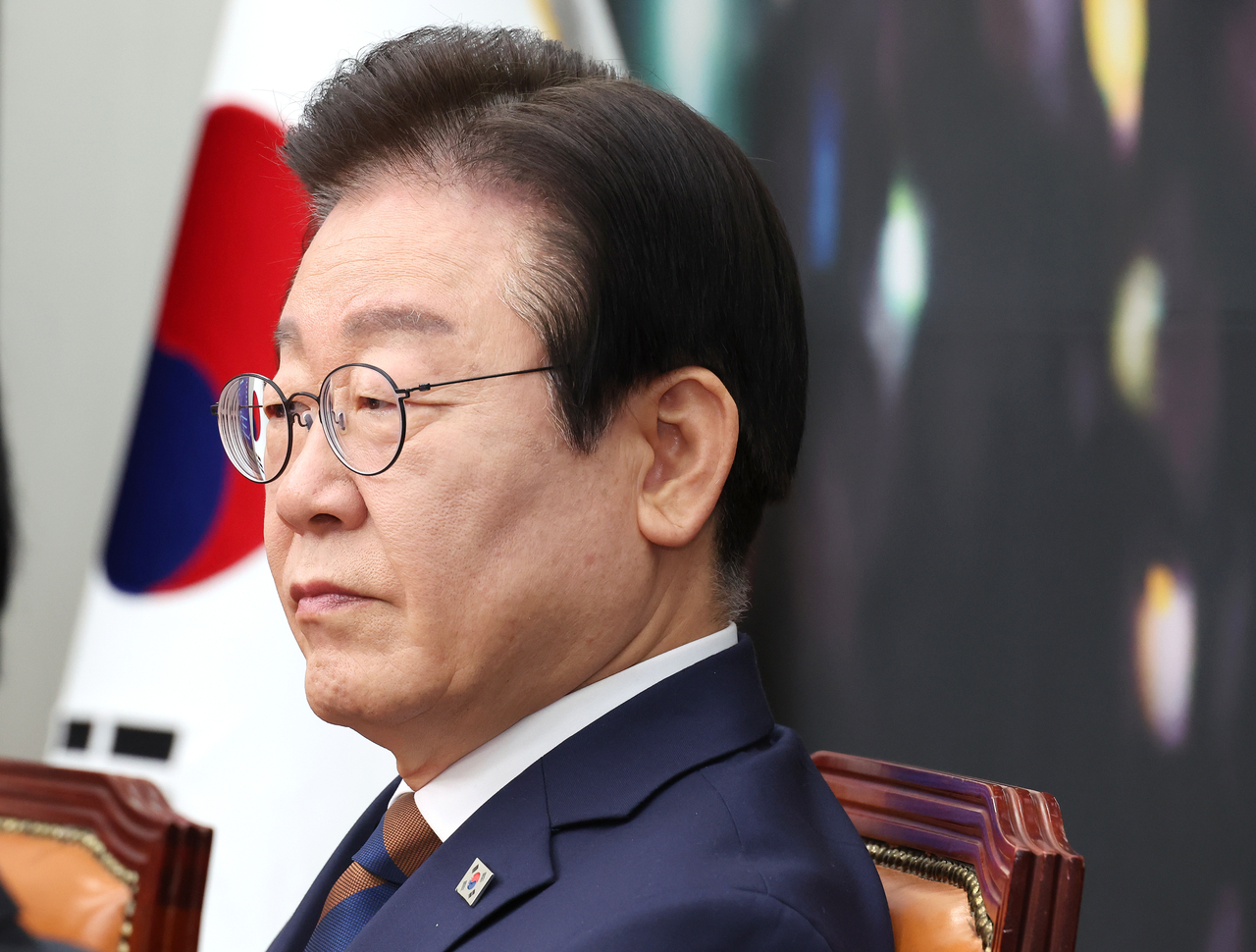
The Democratic Party of Korea is behind the rival People Power Party in a major poll, in a turnaround since the martial law declaration last month by President Yoon Suk Yeol who is now detained under custody of anti-corruption investigative authorities.
According to the Gallup Korea poll released Friday, the People Power Party's favorability ratings stood at 39 percent, three percentage points ahead of the Democratic Party’s 36 percent.
This is the latest in a series of polls this month that found South Koreans viewing the People Power Party more favorably than its rival Democratic Party -- a trend that the opposition party lawmakers are struggling to make sense of.
In Gallup polls taken in the immediate aftermath of Yoon’s martial law declaration in December, the Democratic Party saw a wide lead over the People Power Party, recording a gap of 24 percentage points at its highest.
The recent shift in the polls indicates that conservatives have been uniting in preparation for a potential presidential by-election, which now seems increasingly probable, according to a Democratic Party lawmaker.
“I think conservatives may be viewing the People Power Party as separate from Yoon,” he told The Korea Herald.
A two-time Democratic Party lawmaker said conservatives were thought to be “overrepresented” in the latest polls. “I don’t think the polls really mean much at this point, so far away from the election,” he told The Korea Herald.
Democratic Party leadership has made “presidential election” a taboo phrase for the party lawmakers in their public statements and remarks, with its leader Rep. Lee Jae-myung noticeably refraining from commenting on Yoon or the ruling party in official appearances in the past week.
The People Power Party is careful not to offer any rosy interpretations.
Rep. Cho Jung-hun said the People Power Party’s strategy committee was analyzing the party's edge over the Democratic Party in some polls.
“We think it is necessary to look into what factors are contributing to our party’s performance in the polls, and really discuss what actions and decisions are needed to maintain and expand the support of our party, not only among our base but among South Koreans who do not swing either toward us or the Democratic Party,” he told reporters.
Friday’s Gallup poll surveyed 1,001 South Koreans aged 18 and up from Jan. 14-16. More information about the poll can be found on the National Election Commission of Korea website.
arin@heraldcorp.com